HomeIPTV vs Cable in 2026: Which Is Worth It?
IPTV vs Cable in 2026: Which Is Worth It?
IPTV vs Cable in 2026: Which Is Worth It?
A practical IPTV vs cable comparison for 2026 covering flexibility, installation, internet needs, and when each option makes more sense.
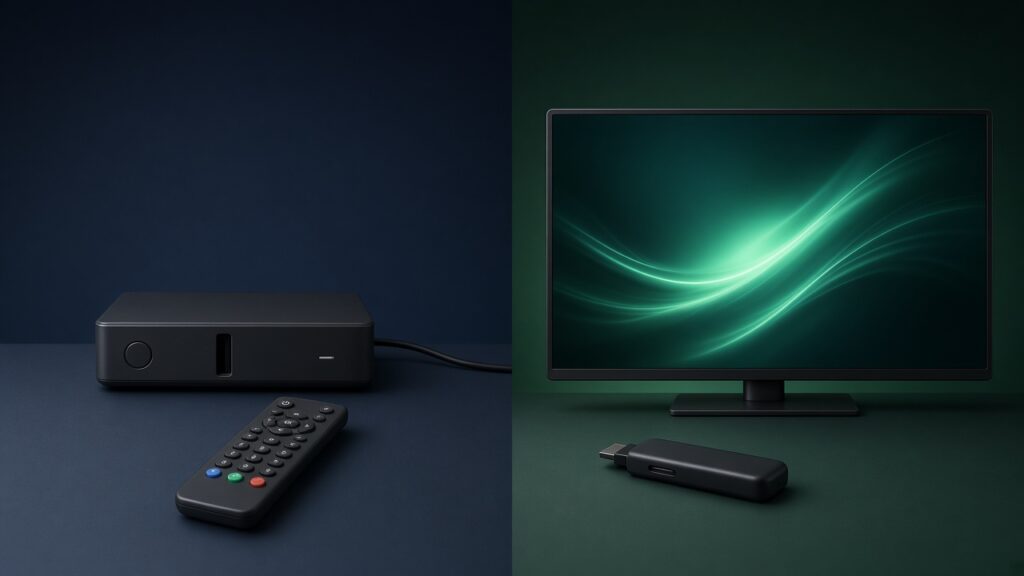
Cable used to be the default. In 2026, many households are weighing IPTV vs cable the same way they once compared cable vs satellite. The right answer depends less on slogans and more on how you watch.
This comparison stays practical. It uses general category differences and notes where a service like Kemo IPTV sits on the IPTV side.
Quick comparison table
| Factor | Cable / satellite | IPTV subscription |
|---|---|---|
| Delivery | Provider network / dish | Internet stream |
| Hardware | Often provider set-top box | Apps on your devices |
| Install | Appointment or self-install kit | Account + player setup |
| Mobility | Mostly home service area | Anywhere with suitable internet |
| Plan style | Bundles / regional packages | Online durations + connections |
| Internet need | Not always required for core TV | Required |
| Flexibility | Stable but less portable | More device flexibility |
Where cable still wins
Cable can still be worth it if you want:
- A familiar local package with minimal app tinkering
- Provider hardware support when something breaks
- Less dependence on home Wi-Fi quality
If your internet is unreliable, cable’s linear feed can feel more predictable day to day.
Where IPTV usually wins
IPTV tends to look better when you want:
- One account across TV, stick, phone, or box
- Online plan lengths without a technician visit
- International channel packages
- Faster start after checkout (once credentials arrive)
Services such as Kemo IPTV are built around that model: choose a plan, receive access details, install a player, and watch on supported devices.
Cost thinking without fake math
Cable bills vary widely by region and bundle. IPTV shops usually show fixed online prices by duration and connections. On Kemo IPTV’s public shop, single-connection plans are listed around $15 / $35 / $55 / $85 for 1–12 months.
Ready to try Kemo IPTV?
Choose a plan that fits your devices and connection needs.
That does not automatically make IPTV cheaper in every case. Compare your real cable quote, equipment fees, and taxes against the IPTV plan you would actually buy.
Experience differences that matter
Guide and apps
Cable guides are standardized. IPTV guides depend on the player and EPG quality.
Peak hours
Sports nights stress both categories differently. With IPTV, your Wi-Fi and ISP path matter more.
Moving or traveling
IPTV is generally easier to take with you if your subscription and local access rules allow it.
A simple decision framework
Choose cable-like service if:
- You hate app setup
- Your internet is weak
- Local traditional packaging is your priority
Choose IPTV if:
- You already stream heavily
- You want device flexibility
- You are comfortable installing a player app
- You can verify package/terms before paying
Final verdict
There is no universal winner in IPTV vs cable for 2026. Cable remains sensible for simplicity and local predictability. IPTV is often worth it for flexibility and online plan control. If you lean IPTV, evaluate providers on devices, connections, support, and clear terms—not just homepage promises.
Hidden costs people forget
On the cable side, watch for:
- Equipment rental
- Broadcast TV fees
- Bundle discounts that expire
- Installation charges
On the IPTV side, watch for:
- Paying for extra connections you do not need
- Buying annual plans too early
- Network upgrades if Wi-Fi is weak at the TV
Total cost of ownership matters more than the first screenshot price.
Hybrid households
Some homes keep a slim cable/antenna baseline for local reliability and use IPTV for international or sports flexibility. That can be a temporary bridge while you test cord-cutting.